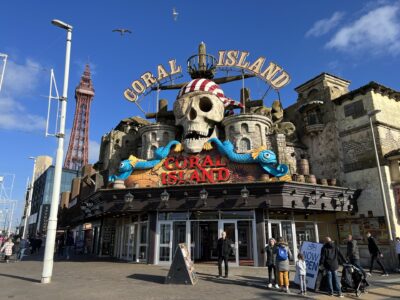

Waterloo Road joins the promenade at the headland of the same name, not a long way North of South Pier. It’s another one of the old, straight roads laid down by our forefathers, that forms the skeleton of today’s resort.
MANY THANKS to Nick Moore and his fascinating History of Blackpool for some of the historical information used in this page. You can read it here
We drive and walk along these old, straight roads and never give a thought to what went before or the years of history that they’ve seen. But dig a little and it’s amazing how many landmark times and events they’ve seen.
Waterloo Headland
Waterloo Headland is one of a series of curved outbuilds at Blackpool South Shore, added with the redevelopment of the seafront. The £100m seawall project completed in 2012 and includes new headlands, curves and steps.
Take a look around in this vlog, filmed on a brisk cold day in January 2023

Enjoyed this video? Why don’t you subscribe to our Visit Fylde Coast YouTube channel – make sure you don’t miss out!
Waterloo Road
Most of the long, straight roads of Blackpool were originally laid out to separate newly enclosed land after the Layton Hawes Enclosure of 1 April 1769. Plots of land were allocated to landowners in Bispham, Layton, Great and Little Marton. Enclosure is also the reason for the building of Waterloo Road, Lytham Road, Bloomfield Road and numerous others.
FREE Newsletter
FREE Newsletter

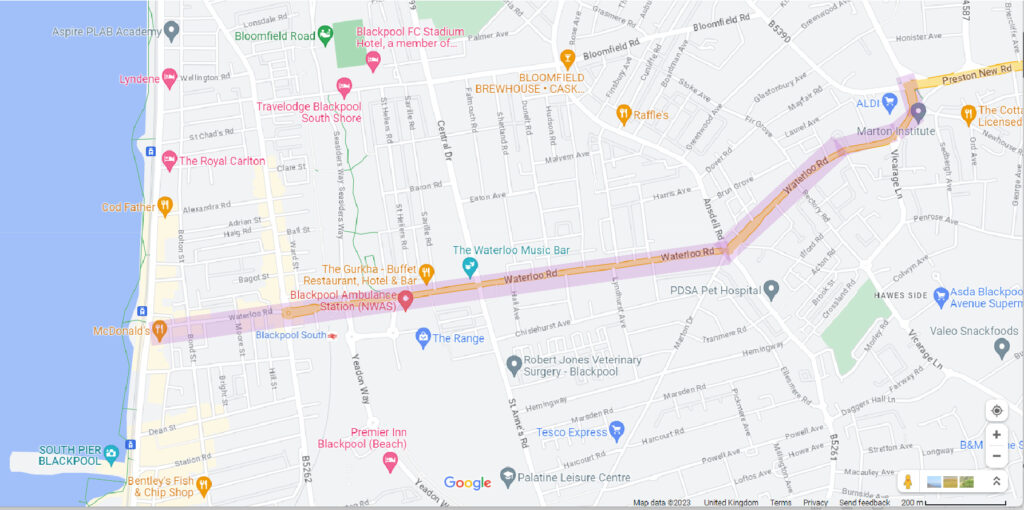
Waterloo Road is surprisingly long. It meets the seafront at Waterloo Headland, extending way inland to the junction known as Oxford Square. That’s where the A583 Preston New Road meets the B5390 Park Road. From there if you continue straight through the junction, Waterloo Road becomes Whitegate Drive. See it marked on the map below – click on it to explore.
Not far from the coast is the railway bridge at Waterloo Road, one of the main bridges in Blackpool which has undergone substantial refurbishment.
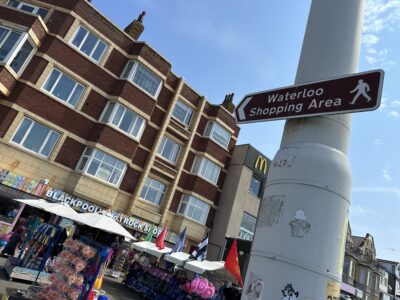
South Shore Shopping Area at Waterloo Road
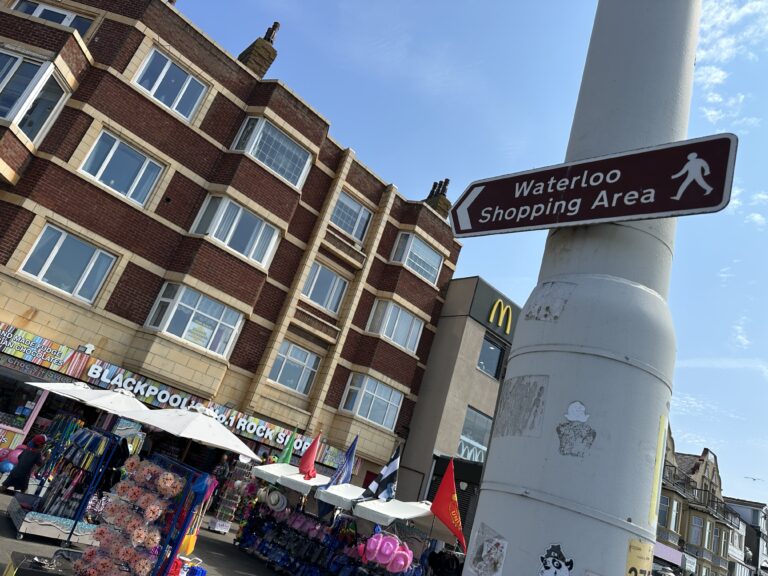
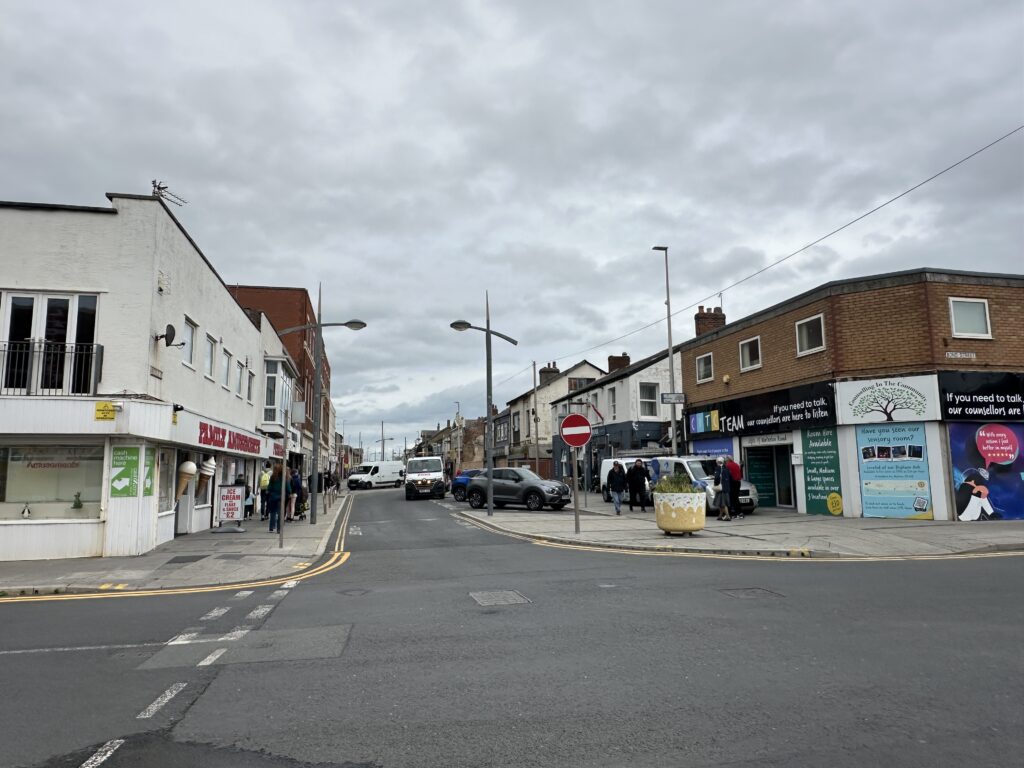
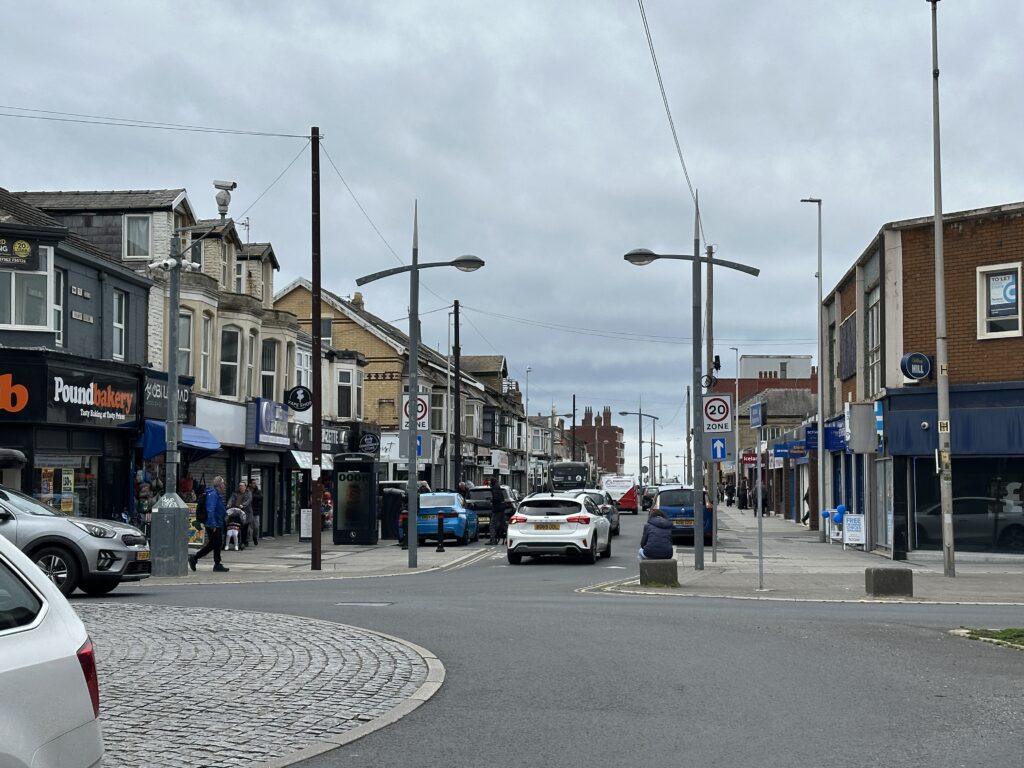
Towards the Western, seaward end of Waterloo Road is a busy little community, and a local shopping area. The people of the Fylde Coast are very lucky to still have local shops. All along this coast there are small patches of commerce where local retailers gather together. Waterloo Road is one of them.
Take a walk along the South Shore end of Waterloo Road –
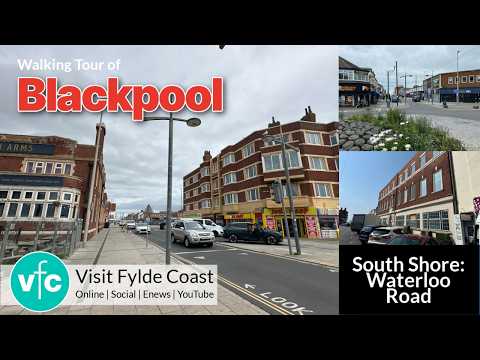
Enjoyed this video? Why don’t you subscribe to our Visit Fylde Coast YouTube channel – make sure you don’t miss out!
- By comparison, we previously went for a walk on a bright and crisp morning in February 2021. Watch the video here to see how the area has changed.
From the Promenade, along Waterloo Road…
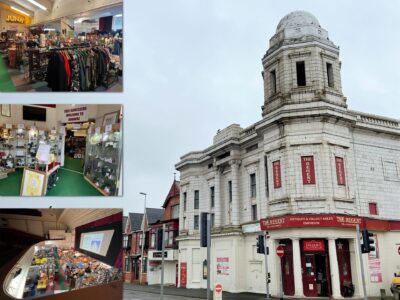
The original art-deco Talbot Court building at the promenade corner of Waterloo Road is a striking building. Rightly so it’s on Blackpool’s Local List of buildings of historical significance. Residential flats upstairs have a grandstand view of sunsets and holiday makers. While below is home to gift and souvenir shops, visited year-round by holiday makers.
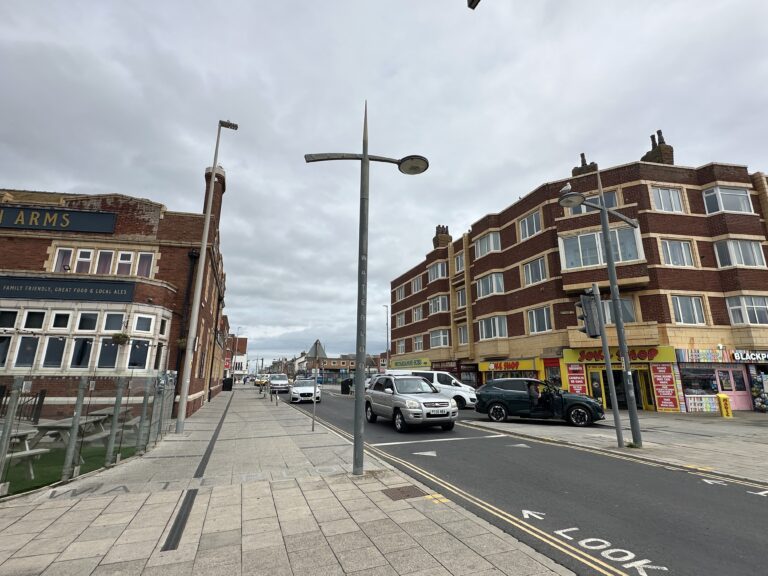
The Joke Shop of Central Drive relocated here, unmissable right on the corner. Head round the corner off the promenade onto Waterloo Road and come first to Brooks Collectables. A treasure-trove of unique finds, a big gift shop behind and its amazing Toy Museum upstairs.
An ice cream at the seaside is as important as rock, candyfloss and seaside donkeys! Whatever your favourite, it’s just something we all have to do.
There’s only one flavour at Italian ice cream makers Notarianni’s, just off the promenade, next door to Brooks Collectables at Waterloo Road. And that’s vanilla!
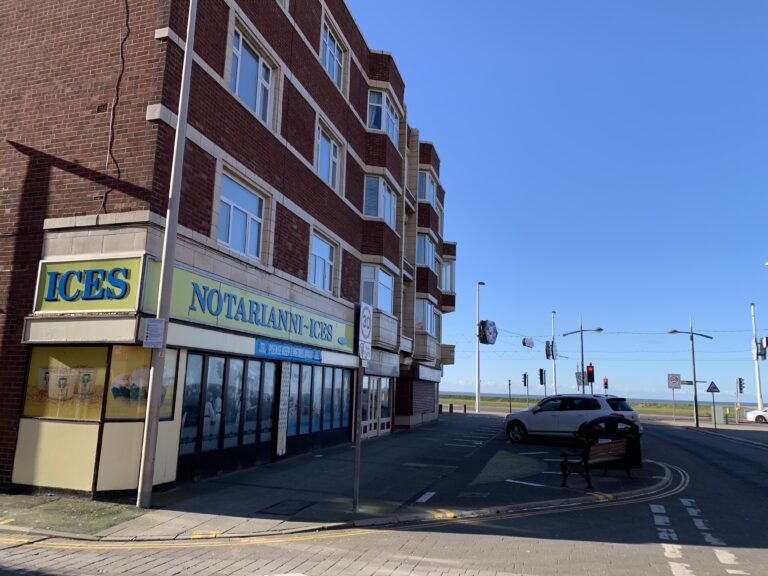
The current ice cream parlour was the families second Blackpool shop, opened in 1937. The secret family recipe has been handed through four generations and is made fresh every day. What’s your favourite topping?
The Wonder of Woolworths
Blackpool’s second Woolies opened at 7-11 Bond Street on 17 March 1928 – as store number 309. Extended in 1938 it was used by the War Department from 1942-1946. For many years it was a busy, popular store and a great addition to this local shopping area. Sadly though the store closed on 8 January 1993.
With Woolworths gone, the store had a number of new tenants. First it became Browsers Indoor Market. It reopened in 1994 as Hartes Homestore before closing at the end of the 2015 season.
Empty since January 2019, the building stood derelict and boarded over for a number of years. The owner wanted to demolish it and use the space for car parking but Blackpool Council was opposed to the plan. So meanwhile it stood there as an eyesore: a rotting corpse of better days gone by.
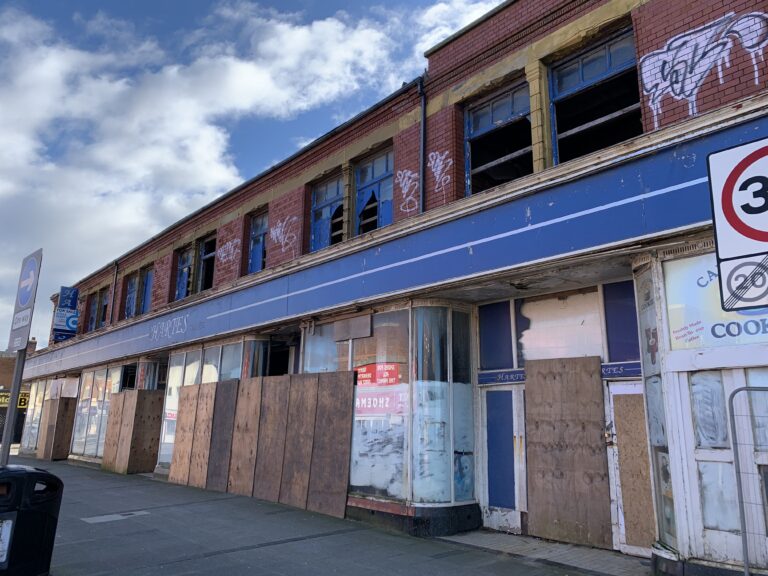
Finally, after arson attacks and a number of fires, the building became unsafe with the roof liable to collapse. With an emergency demolition order issued, down it came and is now the site of something far more useful – a car park. We filmed some of the demolition in October 2024 –

And here’s our follow up video of the Woolworths South Shore site after it had been cleared and tidied up.
Side Streets
The first side street, a right turn at the side of the Dutton Arms, is Commercial Street. Quite unremarkable in itself, it’s a little cut-through to the promenade around the side of the pub, providing access to the small car park. But the wall to the left of Shoemarket is definitely worth a mention.
Visible from the promenade, there’s a huge mural painted onto this wall, a piece of bright and colourful street art. Called “YOU GOT SOUL BOY” it’s created by Coastal Colour Club — a collaboration between House of Wingz and Panter Bros Murals funded by Blackpool Council.
Co‑produced by Sam and Aishley Bell Docherty at House of Wingz, alongside Rachael Leitch from Blackpool and The Fylde College and a brilliant group of young people and volunteers, it’s a powerful example of what happens when local voices lead local art.

Turn right off Waterloo Road, one street back from the seafront, is Bond Street. There are still a few shops to visit there, although it’s a shadow of its former self. Back in the 70’s, Bond Street was a thriving and busy shopping street, catering to the population of the area and many holiday makers. But as the town became less busy, and shopping habits changed, the stores of Bond Street have, one-by-one, closed.
Left at the same cross road junction with Bond Street is Bolton Street. It’s a long, narrow street passing by the rear of all the seafront properties, coming out at Lytham Road.
Other residential side streets between the promenade and junction with Lytham Road include Bath Street, Gordon Street, St Bede’s Avenue/Moore Street, Byron Street, Hill Street and Back Waterloo Road.
South Shore Post Office
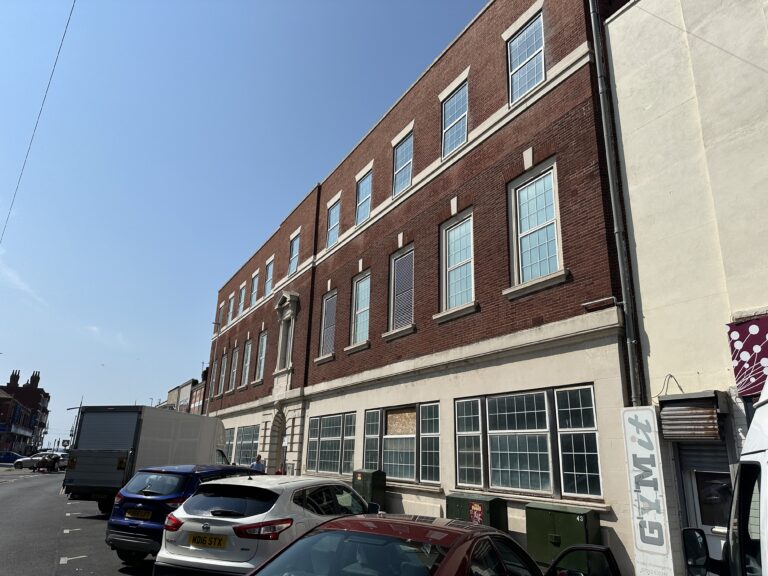
The now-disused building was South Shore’s third Post Office, opened at 20-32 Waterloo Road on 29 June 1929. The brand-new two-storey building was designed by CP Wilkinson of HM Office of Works, and built by W Eaves & Son of Blackpool.
The office itself had a 120-foot frontage and a large vestibule with public telephone cabinets. Swing doors led into a 500 sq ft public space with the sorting office immediately behind, complete with ‘retiring’ space for the postmen. The local telephone exchange was housed on the entire first floor.
It was the 1990’s when it closed, remaining closed today.
The Gap in Waterloo Road
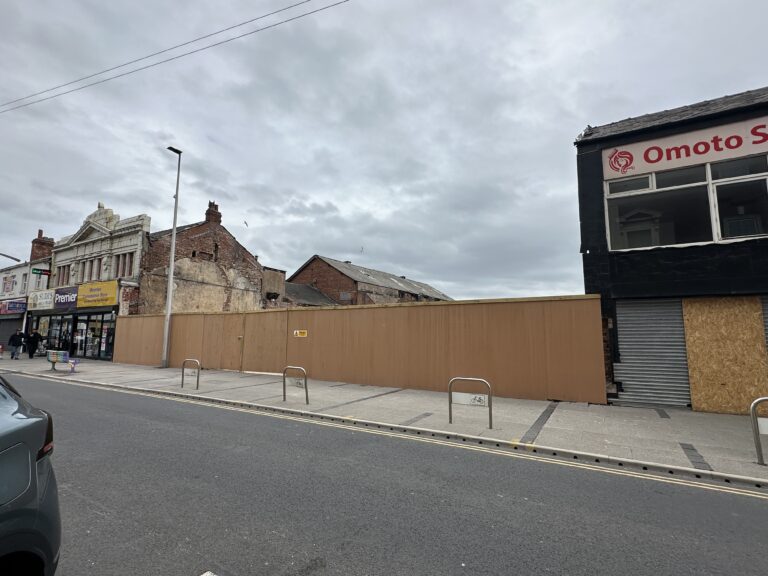
Today when you pass along the seaward end of Waterloo Road there’s a big gap in the landscape, currently boarded off. It’s where the Masonic Hall originally opened in 1893, later becoming the site of South Shore Collegiate School.
On 9 February 1928, Waterloo Road Market opened here, selling all manner of everything. Clothes, homewares, gifts, food – you could buy it all in this bustling. vibrant place, which also had a back entrance onto Rawcliffe Street. Various businesses traded in this building, including a car showroom, on and off until the late 2010’s when it was, once again, a market. But if you looked up above the modern acrylic signs, the architecture of a once fine building remained.
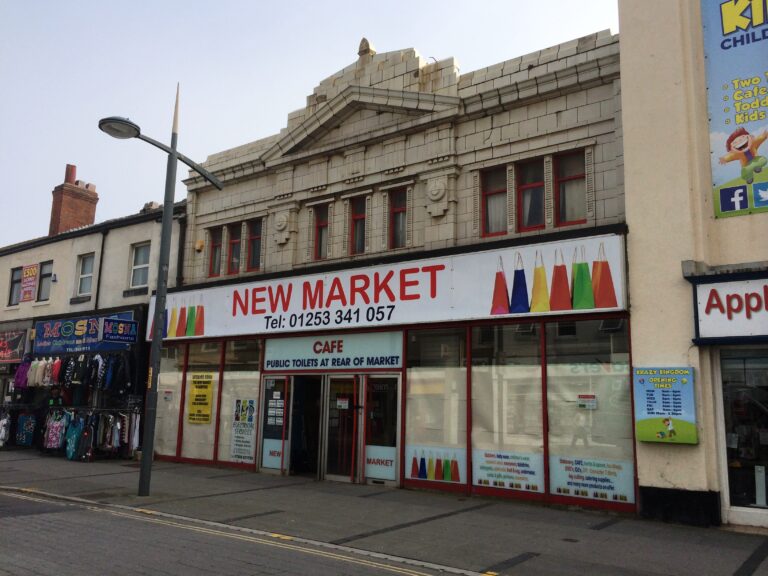
By 2026, SmartMart was the occupier, selling a wide range of home furniture and accessories, specializing in discounted and pre-loved items.
They, and the surrounding community, were devastated when fire broke out during the night of Friday 6 February 2026. With firefighters summoned at 11.30pm, 15 fire engines attended, with three remaining the following morning to dampen down the huge blaze. The massive dramatic flames and billowing black smoke meant that emergency services were on site for four days. With a huge burned out area leaving the remaining structure unsafe, Waterloo Road and numerous other surrounding streets remained closed off for some weeks.
After the Fire at Waterloo Road
They weren’t the only ones to suffer, although thankfully no one was injured. The Omoto Caribbean Shop at the right hand side had only been open for seven months. Sarah and Billy Hallett at Pitstop Community Cafe were also forced to close their fire and water damaged building, a huge loss to the local area.
We went along in March 2026 when the building had been demolished and the aftermath of the fire cleared away.

Now the demolition site is boarded up (below), and all that remains is a gap in the skyline.
The Royal Oak Pub
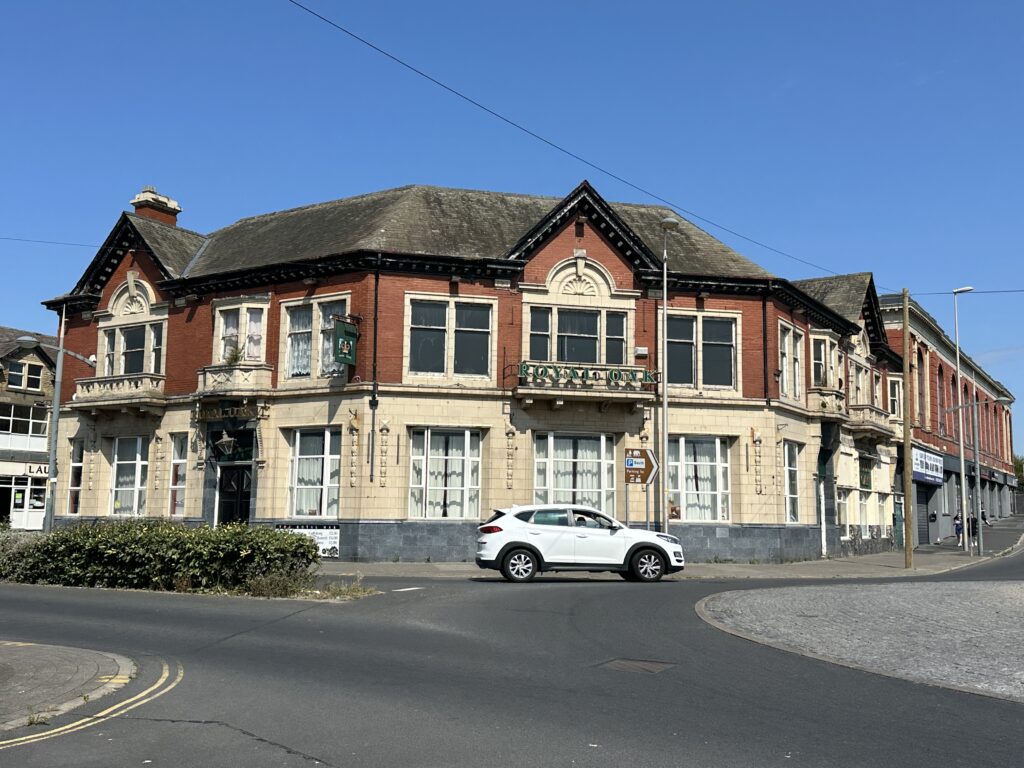
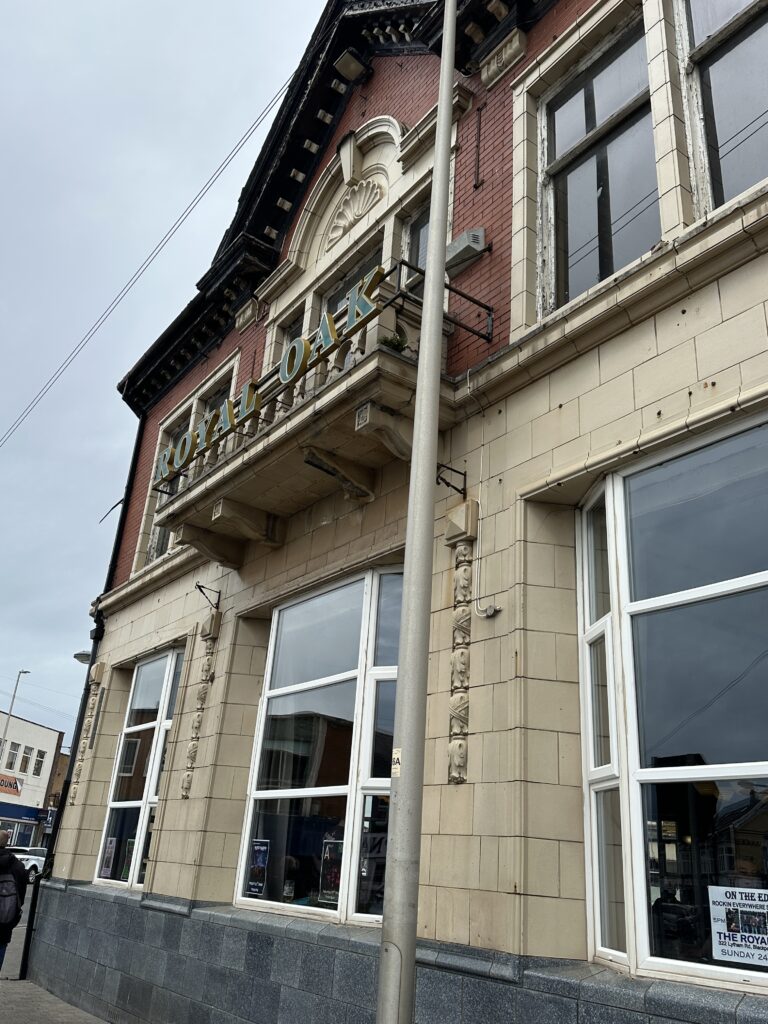
This dates back to the late 1890s and by 1893 had been bought by the C&S Brewery, refurbished and renamed the Royal Oak. Much of it was rebuilt, using brick salvaged from Whinney Heys Hall and faced in glazed terracotta, then it reopened on 12 July 1930.
The fireplace includes hidden carved mice and is believed to have been made by Robert Thompson, the famous mouse-man.
Enjoyed this video? Why don’t you subscribe to our Visit Fylde Coast YouTube channel – make sure you don’t miss out!
Waterloo Road in the Past
It was way back in 1692 when Thomas Wilkins built Damstid Cottage near Spen Dyke. This was at the corner of Vicarage Lane and what’s now called Waterloo Road, not far from the main junction with Preston New Road.
So few people were literate at the time – there was no internet or even pen and paper for most people. With records being patchy back then, the next reference in the history books takes us fast-forward to 1767. Blackpool landowners petitioned petitioned parliament for the enclosure of 1800 acres of common wasteland called Layton Hawes. Before this, anyone would have been free to graze animals, forage and collect wood on the open land.
The Layton Hawes Enclosure of 1 April 1769 changed all that. Plots of land were allocated to landowners in Bispham, Layton, Great and Little Marton. This also laid the foundations for the development of a hamlet at South Shore.
Most of the long, straight roads of Blackpool were originally laid out to separate this newly enclosed land. It’s the origins of Waterloo Road, Lytham Road, Bloomfield Road and numerous others.
Did you know? By 1819 the first house had been built facing the shore. Homeowners started to rent out bedrooms – and the hotel boom began!
Consolidating the Road Name
Originally, lots of little bits of road with different names made up what we know as Waterloo Road. Road and place names often change over time and this is no exception.
Originally, the road from the sea in the West to Cow Gap Bridge on Hawes Side Lane was called Cow Gap Lane. Another way continued from the same bridge to what’s now Oxford Square – where Greggs is! But the whole of the route was renamed Waterloo Road in 1898, said to be renamed after the victory at the Battle in 1815.
While you’re here…
Go to the homepage of the Live Blackpool website for the latest updates.
Love the Fylde Coast? Sign up for your email newsletter. Packed full of interesting things it arrives in your inbox all 52 weeks of the year.
👉Join us on Facebook at our Visit Fylde Coast Facebook Group. Plus hundreds of videos to watch on our YouTube channel – from all over the Fylde Coast!
📣JOIN our new VFC WhatsApp Channel for what’s happening, interesting local information, history, communities, events and much more.
Booking a stay? Pick a safe, clean and legal place to stay, at the very best price. Book with the Visit Fylde Coast guide.
We Need Your Help
We Need Your Help